


The term mid-century design was coined by Cara Grenber in 1984. It was basically the title of her book. This label was linked to furniture items that were functional, modern, and very easy to use.
So what exactly is mid-century furniture?
Well, items made from 1950 to 1970 are called mid-century furniture. Those items had clean, sculptural lines and a perfectly balanced aesthetic. It was also called furniture candy due to its bubble shapes and sugar-coated colors.
In today’s article, we’ll talk about the materials it used and its different styles. Let’s get started.
Common Styles
So there were three prominent categories of mid century furniture: biomorphic, the machine, and the handcrafted.
Biomorphic furniture has organic and curved surfaces. The designs were molded into unique shapes of kidneys and boomerangs. Similarly, the belly-button-shaped room dividers (combined with the human body) were frequently used to create functional divisions of space.
In the machine type, the furniture had stark, space-age geometric forms.
Handmade furniture expressed minimalism and usefulness through the sculptural lines of shaped wood. Chairs with graceful leather and finely sculpted wood were really common in that era.
Materials Used
Mid-century designers used materials for their unique qualities, not to imitate the grain of wood.
Alongside wood, they would use relatively new materials like metal, vinyl, and plywood. They created exciting juxtapositions when used with wood. Most pieces of furniture combined only two materials or two colors (which created tension and harmony without the superglue ornament).
For example, the walnut hardwood and glass tables were really popular due to their duality. Similarly, the plastic resin or wire mesh chairs had a mix-and-match quality as they were available in different colors. Customers also had the chance to select a rocker, wood, or metal base.
Can We Get Mid-Century Furniture Items from a Second Hand Furniture Store?
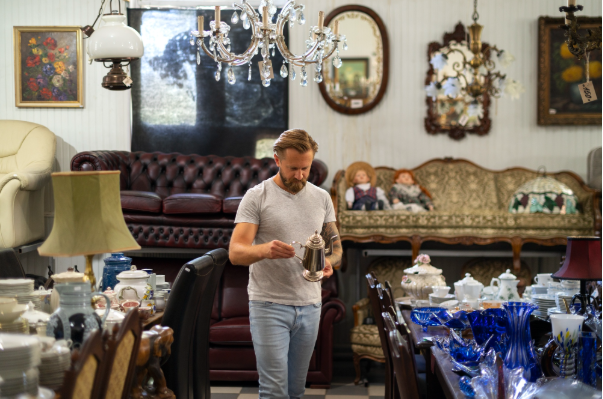
Absolutely. A second hand furniture store is one of the best places to find authentic and iconic mid-century furniture. In thrift stores, the pieces sell very fast, and so you may find it hard to locate everything here. But specialty vintage shops and local used furniture markets can help you easily find your desired items.
But you must check the quality of material before buying anything. For example, many mid-century pieces use wood veneer over particle boards (rather than solid teak). So it’s important to carefully inspect for water damage.
Also check drawers or the underside of tables for maker marks, branded stamps, or designer tags to verify the authenticity.
Design Tips
If you’re planning to design your spaces with midcentury furniture, you must keep certain things in mind. For example, make sure the wood pieces you choose work in harmony and don’t clash. Not all items need to be the same, but they should complement each other.
Then keep the size limitations in mind as well. The furniture pieces of yesteryear cannot accommodate modern households, so you need to be careful here.
Some designers also recommend blending midcentury modern decor with unique styles to keep your space from feeling like the museum of the 1970s. For example, an old chair can contrast perfectly with a contemporary rug or a transitional couch.